Special discounts on classical philosophy.

The Unshakable Essence: Metaphysics as a Code for Building a Life of Substance and Honor in Modern Chaos
Aristotle's concept of substance reveals the immutable core of character. Learn why true honor comes from refining essence — not chasing external change.
METAPHYSICS
Tharros Dynamos
3/2/20264 min read
What Remains When Everything Changes
In a world of constant change and algorithms fragmenting your attention, what remains unshakable in you?
This is not a self-help question. It is the foundational question of metaphysics — the oldest and deepest branch of philosophy. And the answer it offers is sharper than any productivity hack.
Metaphysics studies "being as such": what things are at their core, what makes something that thing and not another. Aristotle, who gave this inquiry its definitive shape over two thousand years ago, introduced a concept that cuts through modern noise like a blade: ousia — substance.
Substance, in Aristotle's framework, is what exists "in its own right." It is not a smile (which exists only on a face), not a haircut (which exists only on a head), not a job title (which exists only within an institution). Substance is the irreducible subject — the thing that bears properties without itself being a property of something else. It has what Aristotle called a determined identity: it makes sense to ask whether it is the same thing across time and circumstances, and the question has a definite answer.
Contrast substance with accidents: properties that a thing can gain or lose without ceasing to be what it is. Socrates can be sitting or standing, tanned or pale — these are accidental. But his rational nature, his identity as this particular being — that is substantial.
What does "substance" really mean in everyday life?
It means there is a difference between what you essentially are and what merely happens to be true of you right now. Your bank balance, your follower count, your current mood — these are accidents. They change. They will change again. They say nothing about your ousia.
Can ancient philosophy actually apply to modern problems?
Yes — because the problem is not modern. The confusion between essence and accident is as old as human distraction. Aristotle criticized the pre-Socratic "natural philosophers" for supposing that the fundamental reality of things was just stuff — water, air, fire, matter. He insisted that substance is not a material but a structure, a form that organizes matter into something definite.
The parallel is exact: modern culture tells you that you are your possessions, your consumption patterns, your digital footprint. Aristotle's metaphysics says: those are your matter. Your substance is the form — the organizing principle that makes you you.
The Error That Erodes Men
The culture of consumption and distraction erodes essence. It transforms men into reactive shadows — beings without real substance, lost in a sea of ephemeral novelties that promise progress but deliver emptiness and lack of direction.
The error is structural, not moral. Most men seek substance in things that are, by metaphysical definition, accidental: possessions, status, approval. These are mutable. When they shift — and they will — the man built on them has nothing left. He is, in Aristotle's language, a bundle of accidents with no underlying subject.
Honor does not emerge from what you accumulate. It emerges from the internal structure of who you are — from the essential traits that persist when everything external is stripped away.
The common mistake: confusing accumulation with substance. Adding more properties does not create a deeper self. Refinement does. Subtraction does. Knowing what is essential and ruthlessly ignoring the rest — that is the metaphysical discipline.
A Practical Code — 3 Steps
1. Identify your substance daily. Write down 3 essential traits — integrity, focus, discipline, courage — whatever constitutes your core. These are your ousia. Everything else is noise. When facing a decision, ask: does this serve my substance or merely add an accident?
2. Practice voluntary immutability. Dedicate 20 minutes daily to silence. Observe changes around you — news, notifications, provocations — without reacting. This trains the kind of contemplative attention the ancient Stoics called prosochē: vigilance over the present moment, liberation from passions tied to past regret or future anxiety. It is the exercise of remaining substantial while the accidental world churns.
3. Build accountability around essence. Find one ally who shares your values. Share weekly progress measured not by external metrics but against your essential traits. Did you act with integrity? Did you maintain focus under pressure? Did you choose discipline over comfort? This is not journaling for feelings — it is an audit of substance.
Tools for the Path
Philosophy without a source text is opinion. If you are serious about understanding the architecture of reality — and your place in it — you need Aristotle's Metaphysics itself.
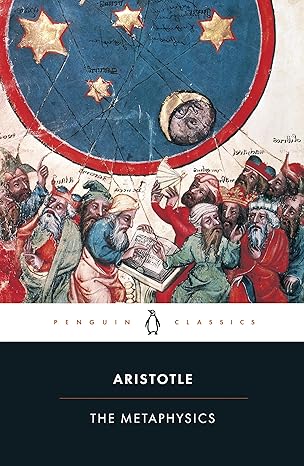
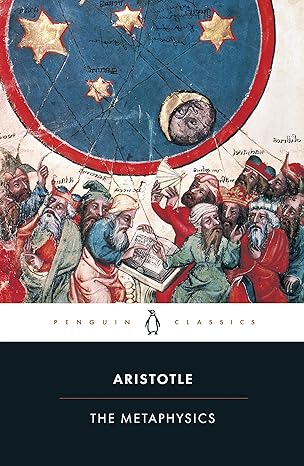
— The Metaphysics (Penguin Classics), translated by Hugh Lawson-Tancred
This is the most accessible English-language entry point into Aristotle's masterwork. Lawson-Tancred's translation is clear and readable, and his introduction highlights the central themes — substance, essence, accident, potentiality, actuality — without academic jargon. The Penguin Classics edition has served generations of readers as a first serious encounter with the foundations of Western thought.
Ideal for anyone building a philosophical foundation — even without prior training in philosophy. If you want to understand what "substance" actually means beyond the metaphor, start here.
👉 Your first step toward understanding the deepest structure of reality — clear, accessible, and built to last.
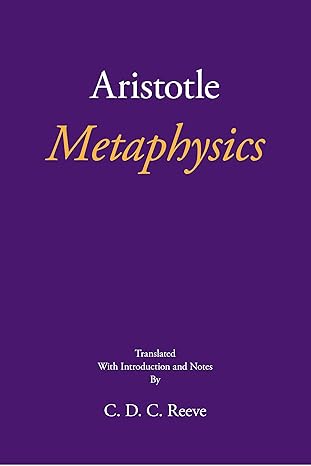
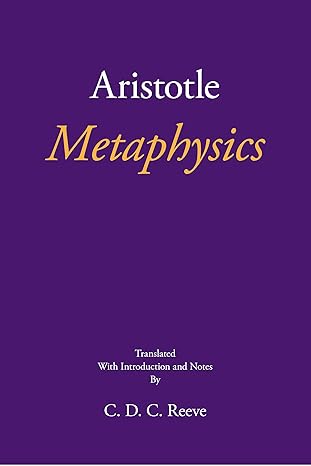
View on Amazon— Metaphysics (The New Hackett Aristotle), translated by C.D.C. Reeve
For the reader ready to go deeper: Reeve's complete translation is a model of accuracy and consistency, with sequentially numbered endnotes that provide exactly the information needed at each juncture. The detailed Index of Terms guides you to focused discussions of key concepts. The general Introduction explains what the book is about, what it is trying to do, how it goes about doing it, and what audience it presupposes.
This is not a casual read. It is a tool for the disciplined mind — the man who has identified his substance and now wants to sharpen it against the original source.
👉 For the committed thinker ready to engage Aristotle on his own terms — precision, depth, no shortcuts.
View on AmazonHonor is the observable substance of an aligned life. Define your mission as guardian of the immutable within you. Advance with discipline. The ephemeral will pass. Your essence — if you build it — will not.
References:
Aristotle, Metaphysics. Stanford Encyclopedia of Philosophy entry (van Inwagen & Sullivan, rev. 2023).
Aristotle, Metaphysics, trans. H. Lawson-Tancred (Penguin Classics, 1998).
Aristotle, Metaphysics, trans. C.D.C. Reeve (Hackett, The New Hackett Aristotle).
Hadot, P. (1995). Philosophy as a Way of Life. Blackwell.
Silva, E. S. da. (2016). Metafísica, Discurso e Modo de Vida Filosófico. Prometeus, (21), 61–86.